
Polyurea vs. Epoxy: Which Floor Coating Is Best for Your Garage?
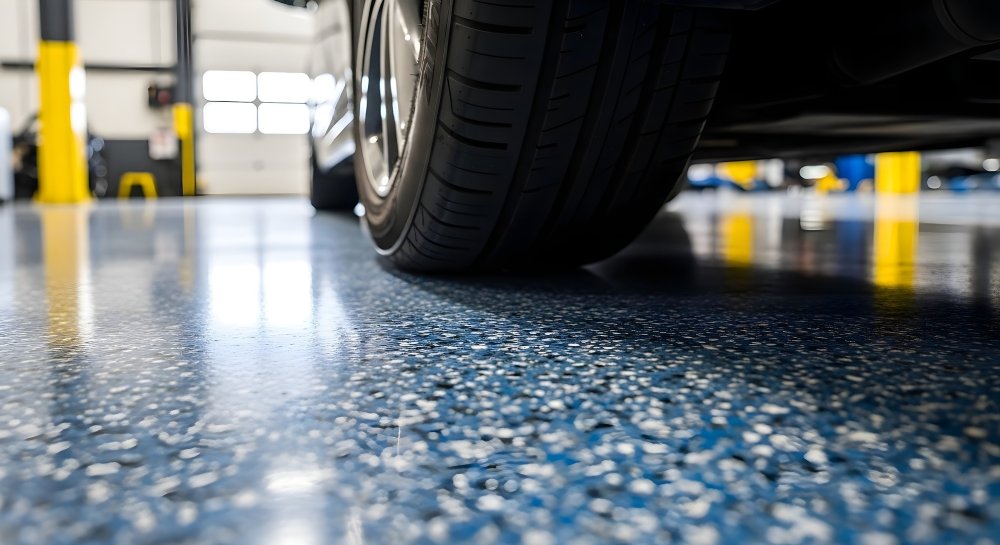
Polyurea vs. Epoxy Garage Floor Coating
Your garage deserves more than a bare concrete floor. If you recently moved into a new house, it won’t take long for that gray slab to show tire marks, oil stains, and cracks. A high-end garage floor coating changes all that by making the space look clean and polished.
You know you want to coat your garage floor, but should you choose polyurea or epoxy? See how these materials stack up in this garage floor coating comparison.
What Is Polyurea vs. Epoxy Flooring?
Epoxy flooring is a resin-based coating composed of epoxy resins and hardeners. It has been the go-to garage floor coating material for decades, thanks in large part to its reasonable price and accessibility. Installers apply it in layers over prepared concrete, where it cures into a rigid, glossy surface.
Polyurea garage floor coatings are made from a more advanced elastomer. The product bonds securely with concrete, forming a flexible yet extremely strong surface. Installation happens quickly, often in a single day, but it requires professional-grade equipment and know-how.
Polyurea vs. Epoxy Cost
Price tends to lead the conversation when comparing garage floor coatings. Epoxy is typically less expensive, often ranging from $4 to $7 per square foot. DIY kits cost even less, which makes them appealing at first glance.
Polyurea garage floor systems cost a bit more, often between $7 and $12 per square foot. This range reflects high-quality installation and materials.
Several factors influence the total cost of your garage floor coating project:
- Concrete condition and prep work needed before the coating can be installed
- Installation method, with DIY kits priced lower than professional installation
- Coating thickness, which impacts material usage and long-term durability
- Customizations, such as decorative flakes, finishes, and color blends
Don’t forget to factor in lifetime costs. While epoxy may look like a bargain, it tends to wear down faster. Polyurea costs more upfront but often lasts longer and maintains its appearance in harsh conditions.
Polyurea vs. Epoxy Curing Time
Depending on temperature and humidity, epoxy may take 24 to 72 hours before it’s ready for foot traffic and up to a week before you can park a car on it. This downtime isn’t a huge problem for most people, but it does require patience.
Polyurea cures much faster. In many cases, the floor is ready for full use within 24 hours. This curing speed comes from its chemical makeup, which reacts rapidly and bonds tightly to the concrete.
Epoxy’s slower curing time gives a longer working window for brave homeowners who decide to attempt a DIY installation. However, polyurea cures so quickly that professional installation from an experienced team is a must. Installers work fast, using specialized tools and precise timing to achieve a smooth, even finish.
Of course, both coatings perform best when installed by trained professionals. Concrete surface prep, moisture testing, and skilled layering affect whether the coating lasts years or starts peeling and bubbling within months.
Polyurea vs. Epoxy Durability
Durability is one of the biggest factors when weighing polyurea vs. epoxy pros and cons. Epoxy creates a hard surface, but such rigidity makes it more prone to cracking under heavy impact or sustained loads. Polyurea offers both flexibility and strength, allowing it to absorb impacts and shift with the concrete.
Consider how polyurea vs. epoxy flooring performs under real conditions:
- Abrasion resistance: Both materials handle foot traffic well, but polyurea holds up longer under heavy use and constant tire wear.
- Impact resistance: Epoxy is more prone to chipping when tools or weights strike the surface, whereas polyurea’s flexibility helps it withstand impacts more effectively.
- Chemical resistance: Both materials resist oil and common garage chemicals, but polyurea is less likely to stain if a spill sits longer than it should.
- Temperature resistance: Epoxy becomes brittle in cold conditions and softens in high heat. By comparison, polyurea expands and contracts with temperature changes, which reduces the risk of cracking.
- UV stability: Epoxy yellows over time when exposed to sunlight, while polyurea maintains its color and finish.
Polyurea vs. Epoxy Lifespan and Maintenance
Epoxy floors typically last 5 to 10 years, depending on usage and installation quality. Mop regularly with soapy water and wipe up spills promptly to keep the surface looking its best. Eventually, scratches, fading, and peeling may require touch-ups or full reapplication.
Polyurea floors often last 15 to 20 years when professionally installed. The surface resists staining and does not trap dirt easily. Routine care is simple: sweep and mop occasionally and stay on top of spills. The coating retains its gloss and color over the years, which reduces the need for repairs.
Final Recommendations
Settling on the right garage floor coating depends on how you plan to use your garage, your upfront budget, and how long you expect the coating to last.
Epoxy is a top choice for light-use applications and tight budgets. It delivers a clean, polished look at a lower upfront cost. If you park your passenger vehicle in the garage and use the space for occasional low-impact projects, epoxy is sufficient.
Polyurea is known for long-term performance. It handles heavy use, resists damage, withstands UV exposure, and maintains its appearance for years. The higher initial investment could be worth it if you use your garage as a luxury vehicle showroom, storage hub, home gym, or workshop. Fast curing also shortens the turnaround time, so you can start using your upgraded garage sooner.
Get a Garage Floor That Matches Your Lifestyle
If you consider your garage an extension of your home, investing in a quality polyurea or epoxy coating makes sense. The team at Custom Floor Coating can make it happen. We have completed thousands of projects across Jacksonville, St. Augustine, and surrounding areas, delivering professional installations that last up to 20 years. We offer one-day installations backed by a five-year warranty, plus a wide range of flooring colors and finishes to match your style. Contact us today for a free estimate and see how a premium garage floor coating can transform your home.